CRP: “One Day in the Life of Ivan Denisovich” by Aleksandr Solzhenitsyn (Audiobook)

The Classics Reclamation Project is my personal challenge to read and enjoy the classics.

The Classics Reclamation Project

I came across One Day in the Life of Ivan Denisovich by Aleksandr Solzhenitsyn (whose name I can almost spell now without looking it up) while perusing my library’s downloadable audiobooks. It was a classic, it was narrated by Frank Muller (can’t go wrong there!), it was by an author I’ve been meaning to read, and there was no waiting list. So, onto my iPod it went.

The novel was first published in 1962 in Russian. It made a big splash because, to quote Wikipedia, “never before had an account of Stalinist repression been openly distributed.” I can see why it would have gotten lots of attention. Solzhenitsyn based One Day in the Life of Ivan Denisovich on his own labor camp experiences.

One Day in the Life of Ivan Denisovich is, in fact, exactly what it claims to be. Ivan Denisovich Shukhov is a prisoner in a Soviet labor camp in the 1950s. The novel follows him from the time he wakes up one morning morning to the time he goes to bed that night. It’s like Solzhenitsyn just snipped a typical day out of his protagonist’s life and laid it out on paper. I can’t imagine a more fitting title.

One Day in the Life of Ivan Denisovich by Aleksandr Solzhenitsyn (cover)Yet the title is also deceptively simple. There is so much more going on in this novel. We get the layout of the camp, its rules and regulations, the nature of the work conducted there. We come to understand a bit about its politics: in the barracks, in the lines, in the cafeteria, on the job. We experience the camp dynamic, the hierarchy and attitudes between and among prisoners and their guards. Through his actions, Shukhov shows us how to secure extra food, how to effectively hide small treasures from guards and fellow prisoners, how to stay out of trouble, how to make decisions no one should have to make. And all this from the simple narration of one man’s day.

I came to like Shukhov quite a bit. I admired his patience and determination, shrewdness and cleverness, his thorough understanding and working of the system in which he was trapped. He had figured out how to survive, and I marveled as I watched. The bits of his backstory that wormed their way into his day made me root for him even harder.

This is the third audiobook I’ve listened to that was read by Frank Muller. The man is a genius with the classics. One problem I sometimes face with the so-called classics is that I get bogged down in the language. Muller reads at a steady clip, wedging what might otherwise be arduous, hard to follow prose into easy modern speech. He doesn’t mull over the words or stretch the lines out the way some narrators do; he gets down to the business of reading the story. It helps that his voice just sounds right for the books he narrates. I’ll never hesitate to listen to a classic Muller has narrated. He’s that good. Listening to the audiobook in this case was beneficial in a way as well, as I often stumble over the pronunciation of unfamiliar foreign names when reading. Hearing someone else pronounce them easily was a treat.

Unfortunately, I’ve not been able to ascertain who translated the version I listened to, so I can’t pass that information along or give credit where it’s due. It was a very good translation, though, to the point that I often found myself forgetting the novel hadn’t been written in English. The cover image displayed here also isn’t the one from the version I listened to…the perils of downloading audiobooks from the library! The novel is short (just over 4 hours on audio) and very good, though, and I would very much recommend it if your interest is piqued. I know I’ll be looking for more by Aleksandr Solzhenitsyn.

Thoughts on “Annie on My Mind” by Nancy Garden (Audiobook)

Annie on My Mind by Nancy Garden found its way onto my TBR list after I read Nymeth’s review over on things mean a lot.

About the Book:

Annie on My Mind by Nancy Garden (audiobook cover)Annie and Liza are seniors in high school when their paths first happen to cross at the Metropolitan Museum of Art. They are immediately drawn to one another, inexplicably, and they quickly become close friends. Though their backgrounds are different–Liza attends private Foster Academy and comes from a well-off family, while Annie’s school is public and her immigrant family shares a small apartment–the girls soon realize they might be falling in love.

But the beginning of their story isn’t where we first encounter Annie and Liza. Instead, we meet Liza, in her first year at MIT, distracted from her studies by thoughts of Annie, in California, and of the mysterious series of events that drove them apart. As Liza finally lets herself revisit her last year at Foster Academy, the story of Liza and Annie unfurls.

Annie on My Mind was one of the first novels for teens to feature gay characters in a positive way.

My Thoughts:

I really loved Annie on My Mind. I found myself making up excuses to listen to it, like I always do when I’ve come across an especially entrancing audiobook. It felt, to me, like a fragile story, like a bird’s egg cupped in my hand. It was everything a love story should be: no gimmicks, no triangles, no supernatural creatures, just two young people discovering love for the first time. I think I loved that best. Though the girls’ sexuality and their discovery and exploration of it was certainly a part of the book, along with the repercussions it had in their worlds, Liza and Annie were first and foremost two characters in love. Their experiences being gay were laid over that strong foundation, creating a book and characters that were multilayered and complex and very real.

To surround Liza and Annie, Garden crafted some wonderful supporting characters. The world the girls inhabited ran the whole gamut of personalities, from supportive and understanding to homophobic and close-minded, and everything in between. These characters gave the reader a fuller story while allowing Garden to explore issues and situations that are both of interest and important. The issues were so well bound up with the characters that I never felt that tension within a novel that comes when an author tries to ascend the soapbox a little too often.

Though Annie on My Mind was first published in 1982, I was surprised to find almost nothing dated about it. There were a couple of moments when I wondered why Annie and Liza weren’t using cell phones. More alarming, as the book progressed, were the ways in which certain key events were handled. I often found myself wondering how such actions could prevail, forgetting the novel isn’t set today. The story felt so contemporary that I had to keep reminding myself it’s nearly 30 years old, that many (though not all) things have changed since its initial publication.

The audiobook was exquisite. Rebecca Lowman’s gentle, thoughtful voice fit Liza’s character like a glove. When Lowman read, Liza spoke. If you’re looking for a good audiobook, I can’t recommend Annie on My Mind highly enough. And as a bonus, there’s a very interesting interview with Nancy Garden following the novel, in which the author talks about her own experience of being gay and how times and literature have changed over the years. She even talks about how Annie on My Mind would be different if she’d written it today, a discussion I found especially fascinating.

Those are my thoughts. Check out Annie on My Mind by Nancy Garden on GoodReads or LibraryThing, read other bloggers’ reviews, or listen to an Audible sample!

Sunday Salon: Stuff and Things

The Sunday Salon.com

This Sunday, as I slowly recover from the ewwy cold that seems to be going around, I have a few miscellaneous things to share!

First, I’ve recently set up shop on Tumblr. I’m still trying to figure out how, exactly, it works, but I like what I’ve seen so far. I’m calling it Bits of Erin, and it’s less directly bookish than Erin Reads. (Though it’s definitely not book-free…how could it be??) If you’re on Tumblr, come say hi! I know there are lots of people on there, but so far I’ve only found a few. And if you’re not on Tumblr, come say hi anyway; I figured out how to enable Disqus comments for non-Tumblr users!

Reading Buddies Button

Second, I’m quite excited about Reading Buddies this month. Extremely Loud and Incredibly Close by Jonathan Safran Foer is amazing, and I’m really enjoying Cutting for Stone by Abraham Verghese as well. And, since my book group is reading it for early July, I’ve added a less official third book: Cloud Atlas by David Mitchell! The Mitchell will probably just get one post in mid July, but if anyone wants to coordinate reading, I’m definitely in. In fact, I’d love to have you along for any of those. I expect they’ll all be interesting to both read and discuss. (Not sure what Reading Buddies is? Find out!)

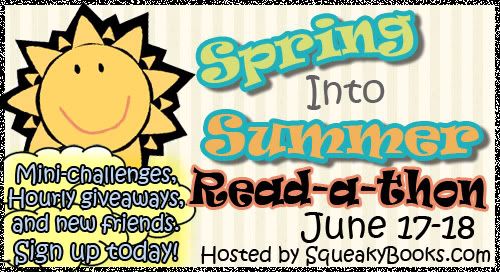
Third, Enna Isilee of Squeaky Books is hosting a readathon in a couple of weeks! I pretty much can’t resist readathons, and this one happens right after I’ll have turned in a big paper for one of my summer classes. What better way to celebrate?? If you’re interested, the Spring-into-Summer Read-a-thon is happening June 17-18, a total of 36 hours of reading, mini-challenges, and giveaways! Check it out:

That’s it for me for today. I have mountains of work awaiting me. Have a wonderful Sunday!

Reading Buddies Discussion: “Extremely Loud and Incredibly Close” by Jonathan Safran Foer

Reading Buddies ButtonBefore I give my usual spoiler warning, let me just say that if you haven’t read Extremely Loud and Incredibly Close by Jonathan Safran Foer, I’d suggest you find yourself a copy and join in! At halfway through, it’s wonderful and, I suspect, will be great to discuss. I’d expected it to take me a while to get through, but when I sat down to read the first chapter, I ended up tearing through 85 pages without even realizing it. So good!

And now, the spoiler warning: if you haven’t read Extremely Loud and Incredibly Close and plan to, be warned that spoilers are fair game from here on out!

I’m loving Extremely Loud and Incredibly Close so far. It’s been on my shelf approximately forever, and I loved Everything is Illuminated (Foer’s earlier novel), so why has it taken me so long to pick up Extremely Loud and Incredibly Close? No idea. Thank you, reading buddies, for prodding me into reading it! Some of the things I love:

  • The way color, photos, and formatting oddities are interspersed throughout the book. For instance, how the marker testing pad at the art supply store is included, or how pages of Oskar’s grandfather’s written communications are interspersed with the story he’s writing out in his daybook. When I first flipped through my copy (which I got used), I thought someone had marked in it! (Check out page 208, if you have the hardcover version.)
  • The fragility of every character, the poignant things they say and do, the pain they try to hide or justify.
  • The Morse code jewelry Oskar made for his mother, encoding messages from his father his mother had never even heard into beads and string, fashioning them into gifts for his mother to wear so that without even knowing it, she’s wrapped in her husband’s last words.
  • Oskar’s creative approach to swearing: “Succotash my cocker spaniel, you fudging crevasse-hole dipshiitake!” (p. 145)
  • The amazing believability with which Foer crafts Oskar, this brilliant but sad little kid trying to cope with a world that’s falling apart.
  • The way each character’s voice is unique, and the way all the stories gradually fill in pieces of the others.

Extremely Loud and Incredibly Close by Jonathan Safran Foer (cover)

I remember struggling just a bit with the narrative style in Everything is Illuminated and wasn’t sure what to expect with Extremely Loud and Incredibly Close, but the latter isn’t presenting any problems for me. Foer’s style strikes me as being a step closer to stream of consciousness than a typical novel, but not so completely there as to be confusing. I find Oskar’s tangents to be both charming and illuminating.

I’m anxious to see where the search for the key’s lock will take Oskar, as well as what the rest of his grandparents’ stories are, but at the same time I’m not looking forward to the book’s end. I’m loving spending time with such wonderful characters. I’m trying to savor, to keep myself from rushing, but the story keeps pulling me along!

What are your thoughts on Extremely Loud and Incredibly Close so far? Do you have favorite elements or characters? How do you like the narrative style?

Thoughts on “Angels in America” by Tony Kushner

Cass (Bonjour, Cass!), Emily (Eat the Books!) and I coordinated our reading of Tony Kushner’s Pulitzer Prize-winning play, Angels in America, and watching of the HBO miniseries adaptation. We’re all posting today, so be sure to check out their thoughts as well!

Angels in America by Tony Kushner (cover)Angels in America is actually two plays: Millennium Approaches and Perestroika. Both are set in the mid-1980s, with the second following the first after a break of a few weeks. Really, they’re two parts of the same story, even though they were published separately at first. Angels in America is about people in New York City struggling with all kinds of things, from mental and emotional problems to identity crises to terminal illnesses. Their stories overlap with one another to form the fabric of the story.

There are a ton of themes in these plays: love and hate, friendship and marriage, religion and belief, sexuality, illness, life and death, politics, and I bet a lot I’ve missed. I just read the plays AND watched the HBO version, and I feel like I could still read or watch many more times before I even came close to getting everything. It never felt like too much, though. All the themes are gloriously interwoven, overlapping and blending into one another. I think Angels in America is accessible at any level.

I’m going to say something now you may never hear me say again: I actually liked both the written play and the film version. I’m the sort of reader/watcher who prefers a story in one form. If I’ve read something, I don’t want to see the movie, and vice versa. But with Angels in America, Tony Kushner wrote the movie script, which meant most of it was close or even identical to the play. For the most part, watching the HBO version was like seeing the play performed live, as opposed to watching a poorly done adaptation. The casting was perfect, as was the filmography. It really was at least as beautiful to watch as it was to read. My only complaint was that in the play, minor characters are all played by the major characters, so that every actor has multiple roles. In the movie, only some of the minor roles were played by the appropriate major counterpart; the rest were played different actors altogether. I loved the duality of the play and was disappointed it wasn’t carried all the way through the movies. I really enjoyed thinking about why Kushner had chosen a specific major character to play a certain minor role while reading the play.

I found that having certain scenes brought to life really helped me understand them better (more on that in a moment). There was also more emotional weight to some of the more dramatic scenes; hearing someone speak the words made the words real. And yet, had I not read the play, I think some of the dialogue might have streamed past me, that I wouldn’t have gotten as much out of it as I did. And so, in this case, reading and watching together made for a great experience.

SPOILER ALERT!

I loved the split scenes in Angels in America. I think my favorite was Act 2, Scene 9 of Millennium Approaches, where Harper confronts Joe and Louis tells Prior he’s moving out. It was powerful in print, but seeing it brought to life in the HBO miniseries was amazing. My favorite scene overall was the very end, where Prior begins speaking to the camera. It brought the whole of what came before it into some kind of order, crystallized its meaning, and provided closure in a sense. I don’t cry much at movies, but the end is what just about got me in this case.

Also, I really liked Prior. And Belize. They were my favorites. I’m glad they were there at the end, together with Hannah. The jury’s still out on Louis, though. I’m not sure he redeemed himself.

I think watching the HBO version was most helpful to me when it came to Harper’s scenes. I couldn’t visualize her in the Antarctica-to-Central-Park scene, for instance, when I read the play, but I liked how it was rendered in the miniseries. The HBO version also helped me imagine the scenes with the Angel, which didn’t make a ton of sense to me until I saw them rendered live.

I think I could write several more posts on Angels in America by Tony Kushner and not run out of material. There’s so much to think about in it. I’d recommend either version, depending on your preference. I’m so glad Cass and Emily got me to read/watch it! Be sure to head over to their blogs to see what they had to say.

If you’ve read or watched Angels in America, what did you think? Do you generally enjoy movie adaptations of books?